
Pigmentation: What Causes it and Which Treatments Actually Work?
If you spent the summer on Ramsgate Main Sands, Stone Bay in Broadstairs or Margate Main Sands, you may have come away with more than a tan.
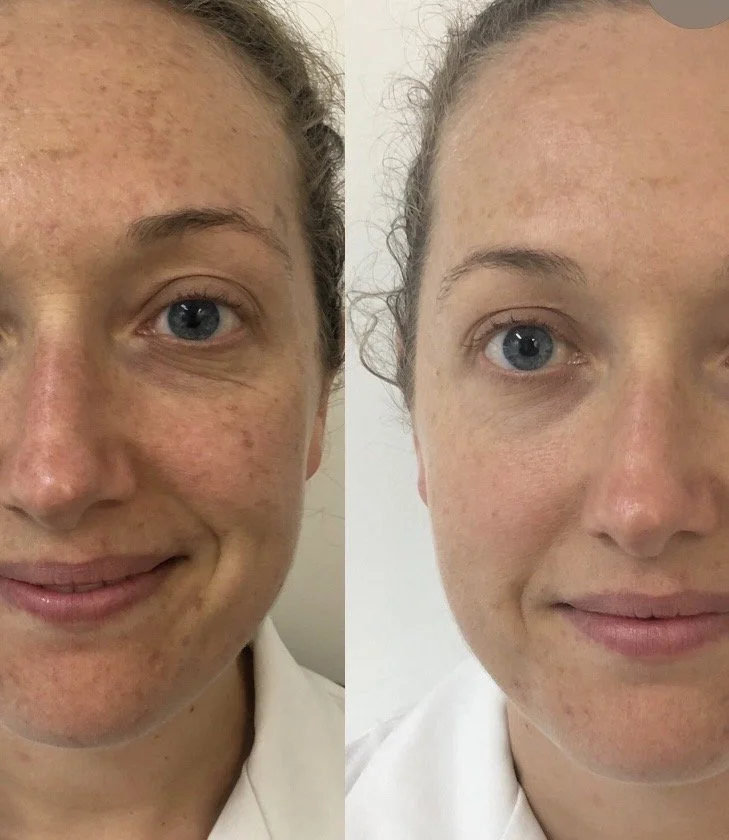
Before and After IPL
Perhaps your tan is now beginning to fade, but the pigmentation it seemed to hide is still there.
Those little brown patches across your cheeks. A sun spot that suddenly looks darker. Freckles that seem more noticeable than they used to. Or perhaps you’re looking at the backs of your hands and wondering when those darker spots appeared.
Sometimes it’s not even a brown mark that’s bothering you. It might be persistent redness, little visible vessels around your nose or cheeks, or red marks that just don’t seem to disappear.
It can be frustrating when your skin still feels like your skin, but uneven colour has gradually become the first thing you notice when you look in the mirror.
And for many women in their 40s and 50s, there’s another question:
“Why does my pigmentation seem so much more noticeable now?”
Hormonal changes can influence some types of pigmentation, while years of accumulated sun exposure can also become increasingly visible as we get older.
So, if you’ve noticed pigmentation becoming darker or more defined during perimenopause or menopause, it doesn’t necessarily mean there’s one single cause — and it doesn’t mean every brown mark should be treated in the same way.
At my private skin studio in Ramsgate, Thanet, this is exactly where I start.
Not every brown mark is the same. And not every pigmentation treatment is right for every skin.
What actually causes pigmentation?
Pigmentation is created by melanin — the pigment responsible for much of the colour in our skin.
When melanin becomes concentrated in certain areas, we can see darker patches or spots, commonly referred to as hyperpigmentation.
Sun exposure is one of the factors that can make existing pigmentation more noticeable. You may enjoy seeing your skin become more golden during the summer, while at the same time certain areas of pigmentation become darker and more defined.
And that’s often when people begin noticing sun spots, freckles, age spots and uneven pigmentation that perhaps weren’t as obvious before.
It doesn’t only happen on the face either.
Years of sun exposure can become noticeable on the hands, décolletage and other exposed areas too.
What are the different types of pigmentation?
“Pigmentation” is an umbrella term, rather than one single skin concern.
What looks like a simple brown patch could be related to sun exposure, freckles, post-inflammatory hyperpigmentation or another form of uneven pigmentation.
Melasma is different again. It commonly appears as larger patches of pigmentation on the face and can be influenced by factors including hormones and UV exposure.
This distinction matters because something that may be appropriate for a straightforward sun spot isn’t automatically the right choice for melasma.
That’s why I don’t believe in seeing a brown mark and immediately reaching for the IPL.
Assessment comes first. Treatment comes second.
“Why am I noticing more pigmentation during perimenopause or menopause?”
This is something I think is worth talking about.
As we move through our 40s and 50s, we can suddenly become much more aware of changes in our skin. Pigmentation that seemed insignificant before may appear darker or more defined, particularly after summer.
Hormonal influences can be relevant to some pigmentation conditions, particularly melasma. At the same time, years of accumulated UV exposure may also be becoming more visible.
So, while it’s tempting to put every new skin change down to hormones, not every patch of pigmentation appearing around perimenopause or menopause is hormonal or melasma.
Understanding what we’re actually looking at is important before choosing how to approach it.
Living by the coast is wonderful. Your skin still remembers the exposure.
One of the loveliest things about living in Thanet is how much time we can spend outside.
Maybe you’ve spent the summer on Ramsgate Main Sands, had days at Stone Bay or Viking Bay in Broadstairs, or walked along the coast towards Margate.
And if you’re a dog owner, you’ll know that our beautiful coastline isn’t something we only enjoy on sunny summer days.
There are all those hours spent walking our four-legged friends along the seafront and coastal paths throughout the year — often without thinking of it as “being out in the sun”.
But our skin is still exposed to daylight and UV.
Those everyday little exposures accumulate over time, which is one reason daily sun protection matters even when you’re not lying on a beach.
Our dogs may absolutely love those long Thanet coastal walks.
Our skin sometimes tells the story of them too.
Not every mark you notice is brown
Sometimes somebody comes to me concerned about what they describe as pigmentation, but what they’re actually noticing is redness rather than brown pigment.
Perhaps it’s redness that never quite seems to disappear.
Maybe it’s little visible vessels around the nose or cheeks.
Or perhaps it’s a red mark left behind after a blemish has healed.
Brown pigmentation and persistent redness aren’t the same thing, so they shouldn’t automatically be treated in the same way.
That’s why when I assess someone’s skin, I’m not simply looking for “pigmentation”.
I’m looking at the colour, location and appearance of the concern, how long it has been there and what might be contributing to it.
Depending on the concern, skin type and individual suitability, IPL can be used with different settings to target certain pigmented and vascular concerns.
Again, the important part is choosing the treatment for the skin — rather than trying to make the skin fit the treatment.
Can IPL help pigmentation and sun spots?
For the right person and the right type of pigmentation, IPL — Intense Pulsed Light — can be an effective treatment option.
IPL uses controlled pulses of light. When treating suitable pigmentation, the light is absorbed by pigment within the skin.
Following treatment, the targeted areas may initially appear darker before gradually fading as the skin goes through its natural renewal process.
IPL can be particularly useful for certain sun-induced pigmentation, freckles and age spots.
However, IPL isn’t suitable for every pigmentation concern or every skin type.
That’s why I carry out an assessment before treatment rather than simply treating every area of darker skin in the same way.
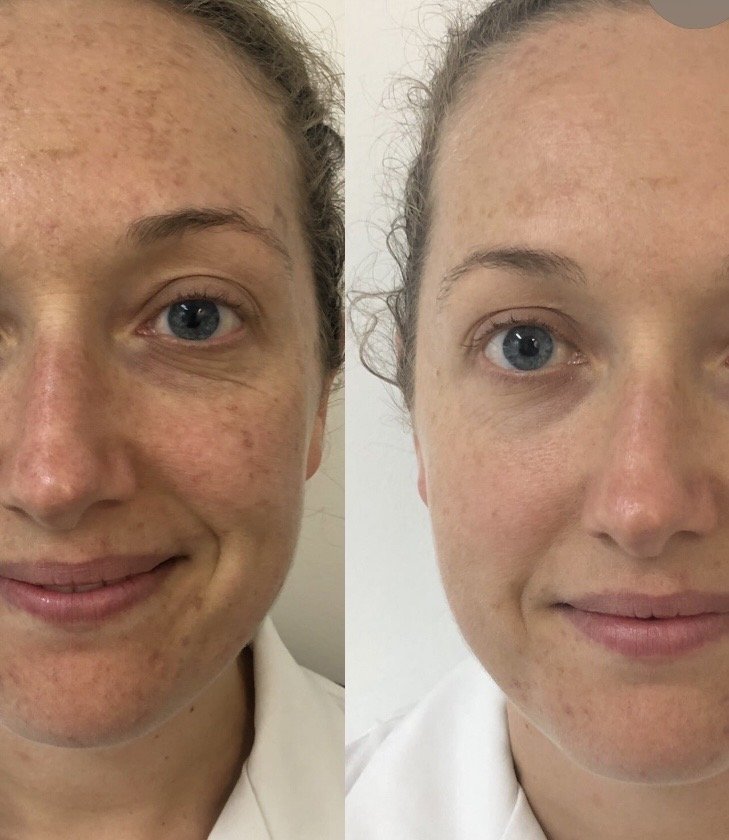
Before and After IPL Treatment
Have you noticed age spots on your hands?
Sometimes it isn’t our face that makes us notice years of sun exposure.
It’s our hands.
Think about how much time your hands spend exposed to daylight — driving, gardening, walking the dog, sitting outside or simply going about everyday life.
Over time, areas of pigmentation can become increasingly noticeable across the backs of the hands.
For suitable clients and suitable pigmentation, IPL can also be used to target pigmentation in this area.
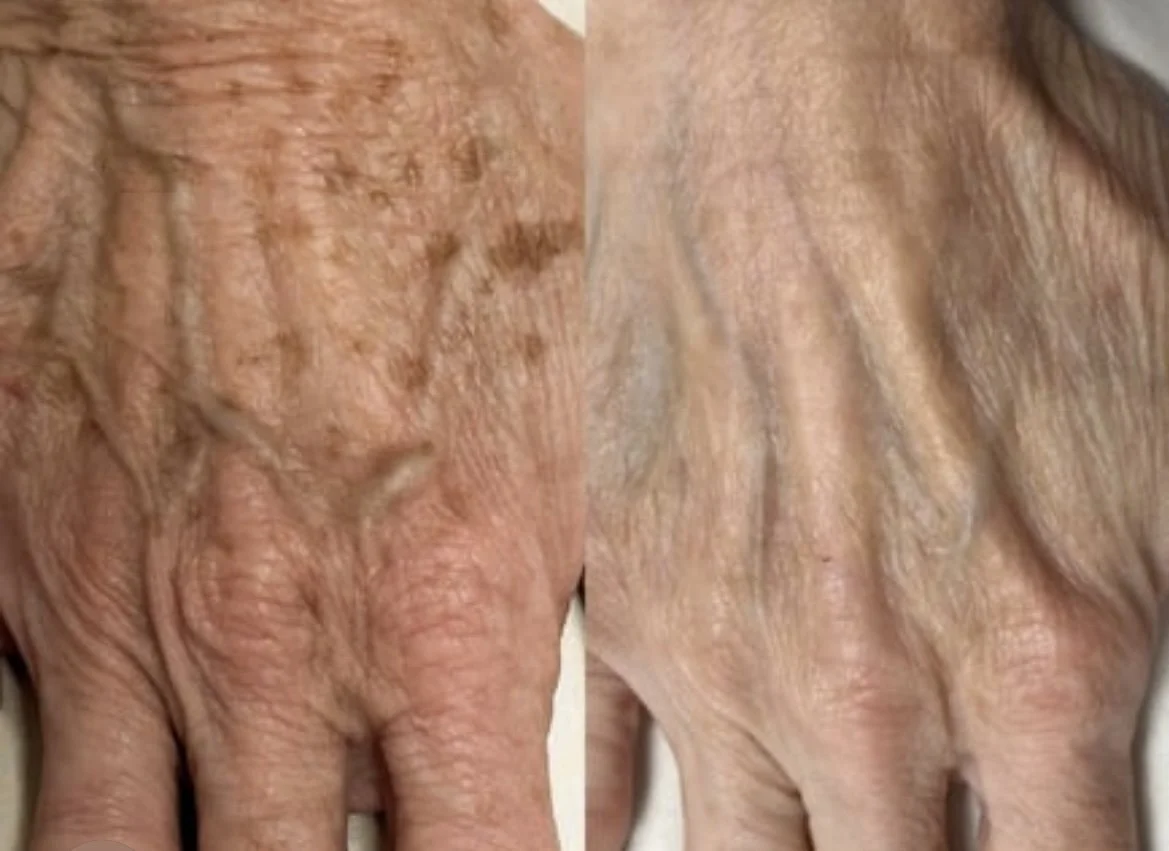
Before and After
What about professional skin peels for pigmentation?
IPL isn’t the only option I offer for pigmentation at my Ramsgate studio.
Professional skin peels and other advanced skin treatments can also be useful when we’re working on particular types of pigmentation, uneven skin tone and overall skin appearance.
And this is why having more than one treatment available matters.
Rather than starting with:
“I want IPL.”
or:
“I think I need a peel.”
I’d rather start with:
“What are we actually trying to treat?”
Then we can decide which approach may be appropriate for your skin.
For some people that may be IPL. For others, a professional peel or another advanced skin treatment may be more appropriate.
What about melasma?
Melasma deserves particular attention because it shouldn’t simply be treated like an ordinary sun spot.
Hormonal influences and UV exposure can both play a role, and melasma can behave differently from straightforward sun-induced pigmentation.
If you have larger or symmetrical patches of pigmentation across areas such as the cheeks, forehead or upper lip, I’d rather assess the skin properly before recommending a treatment.
Sometimes knowing when not to use a particular treatment is just as important as knowing when to use it.
Will pigmentation disappear permanently?
This is where I prefer to be realistic.
Suitable treatments can significantly improve the appearance of certain types of pigmentation, but your skin doesn’t lose its ability to produce melanin.
Further UV exposure and other triggers can therefore contribute to pigmentation becoming more noticeable again or to new pigmentation developing.
That’s why daily broad-spectrum SPF and sensible sun protection remain important, both during a pigmentation treatment plan and afterwards.
And yes — that includes those cloudy dog-walking days along the Kent coast too.
Which pigmentation treatment is right for me?
If you’re looking for pigmentation treatment in Ramsgate, Broadstairs, Margate or elsewhere in Thanet, you don’t need to diagnose your own pigmentation before coming to see me.
At Thanet Rejuvenation Studio in Ramsgate, I offer a range of options for pigmentation and uneven skin tone, including IPL, professional skin peels and advanced skin treatments.
My approach isn’t to put everybody through the same treatment.
We’ll look at your skin, talk about what you’ve noticed and what’s bothering you, and discuss which treatment options may be appropriate.
Because sometimes summer leaves us with lovely memories of days on the Thanet coast…
and sometimes the tan fades, but the pigmentation stays behind.
If it’s now becoming the first thing you notice when you look in the mirror, it may be time to find out what can be done about it.
Thanet Rejuvenation Studio | Private skin studio in Ramsgate, Thanet | Free on-site parking
